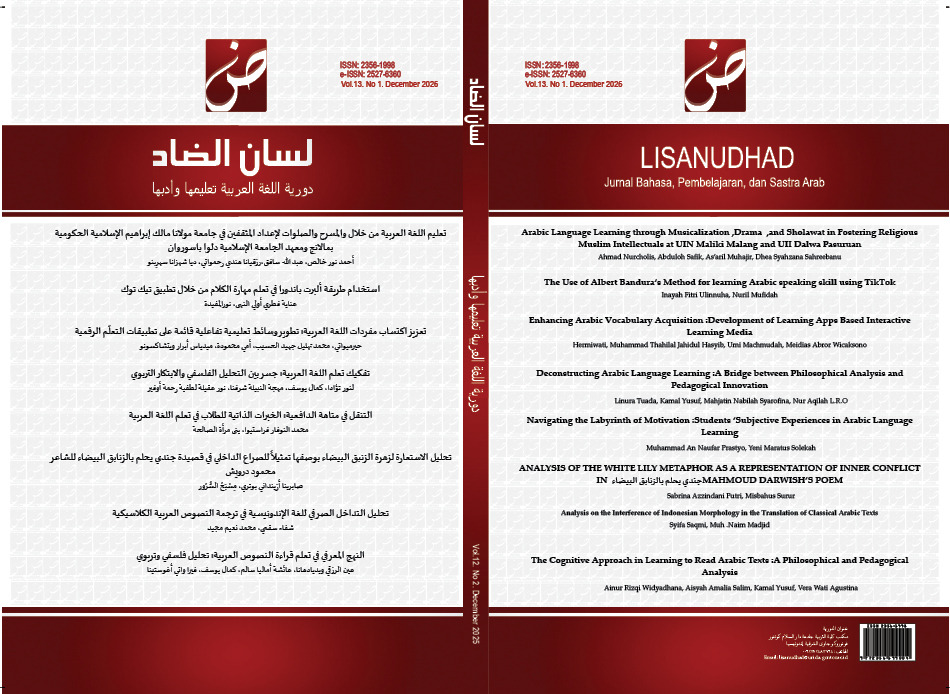
Deconstructing Arabic Language Learning: A Bridge between Philosophical Analysis and Pedagogical Innovation
DOI:
https://doi.org/10.21111/lisanudhad.v12i2.47الكلمات المفتاحية:
Deconstruction، Arabic Language Learning، Philosophy of Education، Pedagogyالملخص
تقليديا، غالبا ما يكون تعلم اللغة العربية محاصرا في نظام عقائدي يركز على القواعد والمعتقدات للمتحدثين الأصليين، مما يحد من معناها في سياق التواصل العالمي. تهدف هذه الدراسة إلى تفكيك المفاهيم الميتافيزيقية الكامنة وراء تعلم اللغة العربية وربط أو تفسير العلاقة بين التحليل الفلسفي والابتكار التربوي في تعلم اللغة العربية. باستخدام الطرق النوعية الوصفية ومنهج دراسة الأدبيات، يحلل هذا المقال مبادئ التفكيك التي بادَر بها جاك دريدا ويطبقها لفهم بنية النماذج في تعلم اللغة العربية. وقد تم العثور على عدة حالات من التفكيك في تعلم اللغة العربية أدت إلى تفكيك العديد من الاستراتيجيات، مثل دور المعلمين، وموارد التعلم، وطرق التعلم، وتقييم التعلم. من المتوقع أن تقترح نتائج هذه الدراسة نموذجًا مبتكرًا لتعلم اللغة العربية يمكن استخدامه كدليل عملي للمعلمين ومصممي المناهج لدمج نهج التفكيك في موادهم التعليمية.
المراجع
Ali, A. S., Ibnian, M. A. M., & Zulkifli, N. S. B. (2024). Teaching Arabic Vocabulary Through Dialogue and Its Procedures for Learners of Arabic as a Foreign Language. Evolutionary Studies in Imaginative Culture, 8, 1451–1459. https://doi.org/10.70082/esiculture.vi.1624
Annisa, M. N., Safii, R., & Gorontalo, U. M. (2023). Needs Analysis of Challenges in Learning Arabic as a Foreign Language in Higher Education : Perspectives of Students and. Eloquence, 2(2), 141–158.
Arab, P. B., Kurniati, D., Arifa, Z., Maulana, U. I. N., & Ibrahim, M. (2021). Model Pembelajaran Contextual Teaching and Learning ( CTL ) dalam Pembelajaran Bahasa Arab. Lahjah Arabiyah, 2(2), 133–140.
Ariyani, L. P. S., Mariyati, T., & Bawa Atmadja, N. (2022). Dekonstruksi Ideologi di Balik Perubahan Tegalan Menjadi Hutan di Desa Riang Gede Tabanan Bali. Jurnal Kajian Bali (Journal of Bali Studies), 12(2), 359. https://doi.org/10.24843/jkb.2022.v12.i02.p03
Butt, G. S., & Ghauri, I. ur R. (2022). THEORY OF DECONSTRUCTION A Comparative Study of the Views of Western and Muslim Theorists and Philosophers. Al-Jami’ah, 60(1), 131–166. https://doi.org/10.14421/AJIS.2022.601.131-166
Delviany, V., Amril, & Dewi, E. (2024). Dekonstruksi Derrida dan Metode Istiqra’ Al Ma’nawi Imam Asy Syathibi dalam Memahami Teks Al Quran. Ihsanika: Jurnal Pendidikan Agama Islam, 2(3), 87–106. https://doi.org/10.59841/ihsanika.v2i2.1376
Hadi, A. H. (2023). The effectiveness of a proposed strategy based on deconstructive theory in developing the skills of analyzing the literary text in the Department of Arabic Language in the faculties of education. Journal for Educators, Teachers and Trainers, 14(2), 163–172. https://doi.org/10.47750/jett.2023.14.02.016
Halim, M. (2024). Dekonstruksi Tokoh Hasan El-Dahsan Dalam Cerpen Si Malang Karya Najib Mahfudz. `A Jamiy : Jurnal Bahasa Dan Sastra Arab, 13(1), 382. https://doi.org/10.31314/ajamiy.13.1.382-394.2024
Haryono, A., & Ali, M. (2025). DEVELOPMENT OF ARABIC LANGUAGE LEARNING MEDIA BASED ON POP SONGS TO ENHANCE STUDENTS ’ LANGUAGE SKILLS. Abjadia, 10(3), 546–554. https://doi.org/10.18860/abj.v10i3.33136
Muhammad, & Rahmah, Q. I. (2025). Ontologi Dan Epistemologi Makna Dalam Bahasa Arab: Perspektif Filsafat Bahasa. Jurnal Pendidikan Indonesia, 6(8), 3988–3999. https://doi.org/10.59141/japendi.v6i8.8516
Muhammadiyah, U., Barat, S., Makfiro, N., Muzadi, N. H., Islam, U., Maulana, N., & Ibrahim, M. (2024). Evaluation of Portfolio Assessment of Student Work in Arabic Language Learning Nikmatul. Tanwir Arabiyyah, 4(2), 149–166.
Rahmanto, D. N., Meliala, A. E., & Lolo, F. A. (2020). Ideology deconstruction of Islamic State of Iraq and Syria (ISIS) returnees in Indonesia. Indonesian Journal of Islam and Muslim Societies, 10(2), 381–408. https://doi.org/10.18326/IJIMS.V10I2.381-408
rustan efendy, amiruddin m. (2019). Dekonstruksi Pembelajaran Bahasa Arab Dengan Pendekatan Saintifik. http://repository.iainpare.ac.id/id/eprint/5206/
Sindi. (2023). Efektivitas Asesmen Berbasis Kahoot terhadap Motivasi Belajar Peserta Didik (Vol. 13, Issue 1). Universitas Muhammadiyah Makassar.
Soekarba, S. R. (2006). Kritik Pemikiran Arab: Metode Dekonstruksi Mohammed Arkoun. Wacana, Journal of the Humanities of Indonesia, 8(1), 78. https://doi.org/10.17510/wjhi.v8i1.248
Sugiyono. (2020). Metodologi Penelitian Kuantitatif, Kualitatif dan R & D. Alfabeta.
Takalafiya, K. L. (2023). The Role of Learner-Focused Instruction in Teaching Arabic Phonemic and Phonological Awareness : Enhancing Language Acquisition and Proficiency. 4(5), 112–118.
Vasanthan, R. (2023). Unveiling Conformity And Differentiation Through Derrida’s “Differance.” ShodhGyan-NU: Journal of Literature and Culture Studies, 1, 6–11. https://doi.org/10.29121/Shodhgyan.v1.i1.2023.6
Yahya, M. (2020). STUDI BAHASA ARAB DALAM PENGUATAN STUDI ISLAM : PERSPEKTIF MAZHAB POSTSTUKTURALISME. Atta’dib Jurnal Pendidikan Agama Islam, 30–41.
التنزيلات
مقدم
##submissions.accepted##
منشور
كيفية الاقتباس
إصدار
القسم
الرخصة
الحقوق الفكرية (c) 2025 Linura Tuada, Kamal Yusuf , Mahjatin Nabilah Syarofina, Nur Aqilah L.R.O

هذا العمل مرخص بموجب Creative Commons Attribution-NonCommercial 4.0 International License.
Authors who publish with this Journal agree to the following terms:
- Free to Share — copy and redistribute the material in any medium or format;
- Free to Adapt — remix, transform, and build upon the material,
The licensor cannot revoke these freedoms as long as you follow the license terms.
Under following terms:
- Attribution — You must give appropriate credit , provide a link to the license, and indicate if changes were made . You may do so in any reasonable manner, but not in any way that suggests the licensor endorses you or your use.
- NonCommercial — You may not use the material for commercial purposes .
No additional restrictions — You may not apply legal terms or technological measures that legally restrict others from doing anything the license permits.
Notices:
You do not have to comply with the license for elements of the material in the public domain or where your use is permitted by an applicable exception or limitation .
No warranties are given. The license may not give you all of the permissions necessary for your intended use. For example, other rights such as publicity, privacy, or moral rights may limit how you use the material.