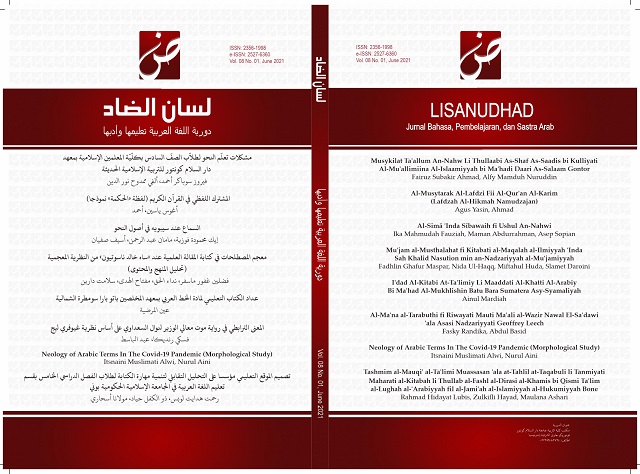
Al-Musytarak Al-Lafdzi Fii Al-Qur’an Al-Karim (Lafdzah Al-Hikmah Namudzajan)
الكلمات المفتاحية:
Polysemy، Semantics of the Qur’an، al-hikmahالملخص
Polysemy refers to the phenomenon in which a single lexical item possesses multiple related meanings depending on its linguistic and contextual use. The term al-ḥikmah (wisdom) in the Qur'an represents one such example, as its meaning varies across different verses and contexts. These semantic variations indicate that al-ḥikmah functions as a polysemous lexical item rather than conveying a single fixed meaning. This study aims to examine the polysemous meanings of al-ḥikmah in the Qur'an through an analysis of classical Arabic dictionaries and Qur'anic exegeses (tafsīr).
This research employed a qualitative descriptive approach based on library research. Data were collected from Qur'anic verses containing the term al-ḥikmah and analyzed by comparing lexical definitions with interpretations provided by classical and contemporary exegetes.
The findings reveal that the root word ḥakama, from which al-ḥikmah is derived, is associated with the basic meaning of restraining, judging, or preventing error. The study identifies that derivatives of this root occur in approximately 210 Qur'anic verses, while the noun al-ḥikmah itself appears 20 times across 20 verses in 12 chapters (sūrahs). Contextual analysis demonstrates that al-ḥikmah carries several related meanings, including al-mawʿiẓah (admonition), al-sunnah (the Prophetic tradition), al-nubuwwah (prophethood), al-fahm (understanding), al-Qur'an, and ʿulūm al-Qur'an aw tafsīruhu (the sciences or interpretation of the Qur'an). Although scholars generally agree on five of these semantic interpretations, they differ regarding whether al-sunnah should be regarded as one of the meanings of al-ḥikmah. These findings demonstrate the richness of Qur'anic semantics and highlight the importance of contextual interpretation in understanding polysemous lexical items.
المراجع
ابن عطية الأندلسي المحاربي. (د.ت.). المحرر الوجيز في تفسير الكتاب العزيز (ج. 1). دار ابن حزم.
الفراهيدي، الخليل بن أحمد. (د.ت.). كتاب العين (ج. 3).
الدامغاني، الحسين بن محمد. (د.ت.). الوجوه والنظائر لألفاظ كتاب الله العزيز
عمر، أحمد مختار. (2002). المعجم الموسوعي لألفاظ القرآن الكريم وقراءاته (ط. 1). الرياض: مؤسسة سطور المعرفة.
عمر، أحمد مختار. (2003). الاشتراك والتضاد في القرآن الكريم: دراسة إحصائية (ط. 1). القاهرة: عالم الكتب.
عمر، أحمد مختار. (2006). علم الدلالة. القاهرة: عالم الكتب.
ابن منظور، جمال الدين محمد بن مكرم الأنصاري. (د.ت.). لسان العرب (ج. 12).
ابن الجوزي، عبد الرحمن بن علي. (د.ت.). نزهة الأعين النواظر في علم الوجوه والنظائر.
القرعاوي، سليمان بن صالح. (1990). الوجوه والنظائر في القرآن الكريم (ط. 1). الرياض: مكتبة الرشد للنشر والتوزيع.
زبيدي، سوجيات. (2019). علم الدلالة القرآنية: منهجية التحليل الدلالي في ألفاظ القرآن (ط. 2). يوجياكرتا: كورنيا كلام سمستا للنشر والتوزيع.
مكرم، عبد العالم سالم. (1996). المشترك اللفظي في الحقل القرآني (ط. 1). بيروت: مؤسسة الرسالة.
العزازي، عبد الله. (د.ت.). فقه اللغة العربية. القاهرة: كلية اللغة العربية، جامعة الأزهر.
الحمد، محمد بن إبراهيم. (د.ت.). فقه اللغة: مفهومه، وموضوعاته، وقضاياه (ط. 1). الرياض: دار التونسية للنشر.
جبل، محمد حسن حسن. (2001). المعجم الاشتقاقي المؤصل لألفاظ القرآن الكريم (ط. 1، ج. 1). القاهرة: مكتبة الآداب.
عبد الباقي، محمد فؤاد. (1364 هـ). المعجم المفهرس لألفاظ القرآن الكريم.
التنزيلات
مقدم
منشور
كيفية الاقتباس
إصدار
القسم
الرخصة
الحقوق الفكرية (c) 2026 Agus Yasin, Ahmad

هذا العمل مرخص بموجب Creative Commons Attribution-NonCommercial 4.0 International License.
Authors who publish with this Journal agree to the following terms:
- Free to Share — copy and redistribute the material in any medium or format;
- Free to Adapt — remix, transform, and build upon the material,
The licensor cannot revoke these freedoms as long as you follow the license terms.
Under following terms:
- Attribution — You must give appropriate credit , provide a link to the license, and indicate if changes were made . You may do so in any reasonable manner, but not in any way that suggests the licensor endorses you or your use.
- NonCommercial — You may not use the material for commercial purposes .
No additional restrictions — You may not apply legal terms or technological measures that legally restrict others from doing anything the license permits.
Notices:
You do not have to comply with the license for elements of the material in the public domain or where your use is permitted by an applicable exception or limitation .
No warranties are given. The license may not give you all of the permissions necessary for your intended use. For example, other rights such as publicity, privacy, or moral rights may limit how you use the material.